In 1918, training had improved quite a bit with the Gosport System developed by Robert Smith-Barry. The RFC (RAF after April 1, 1918) was capable of graduating 500 pilots per month in five different training areas reporting to a Directorate of Training (DOT). The DOT had 1,203 aircraft in June of 1918, out of which 368 were Avro trainers. A so-called "all-through" system was implemented, which meant that a pilot would remain at one location throughout his training, with the exception of gunnery school. Gone were the Days when a RFC pilots would have three hours solo flying under his belt to qualify as a "good pilot", and the number of training-related accidents had decreased. In the Days of the old Training Division, trainees wrecked a stunning 9.75 percent of the Aircraft on any given day. By the turn of 1917-18, the number was down to 3.11 percent.
A film about training pilots of the United States Air Service in 1918 can be found here.
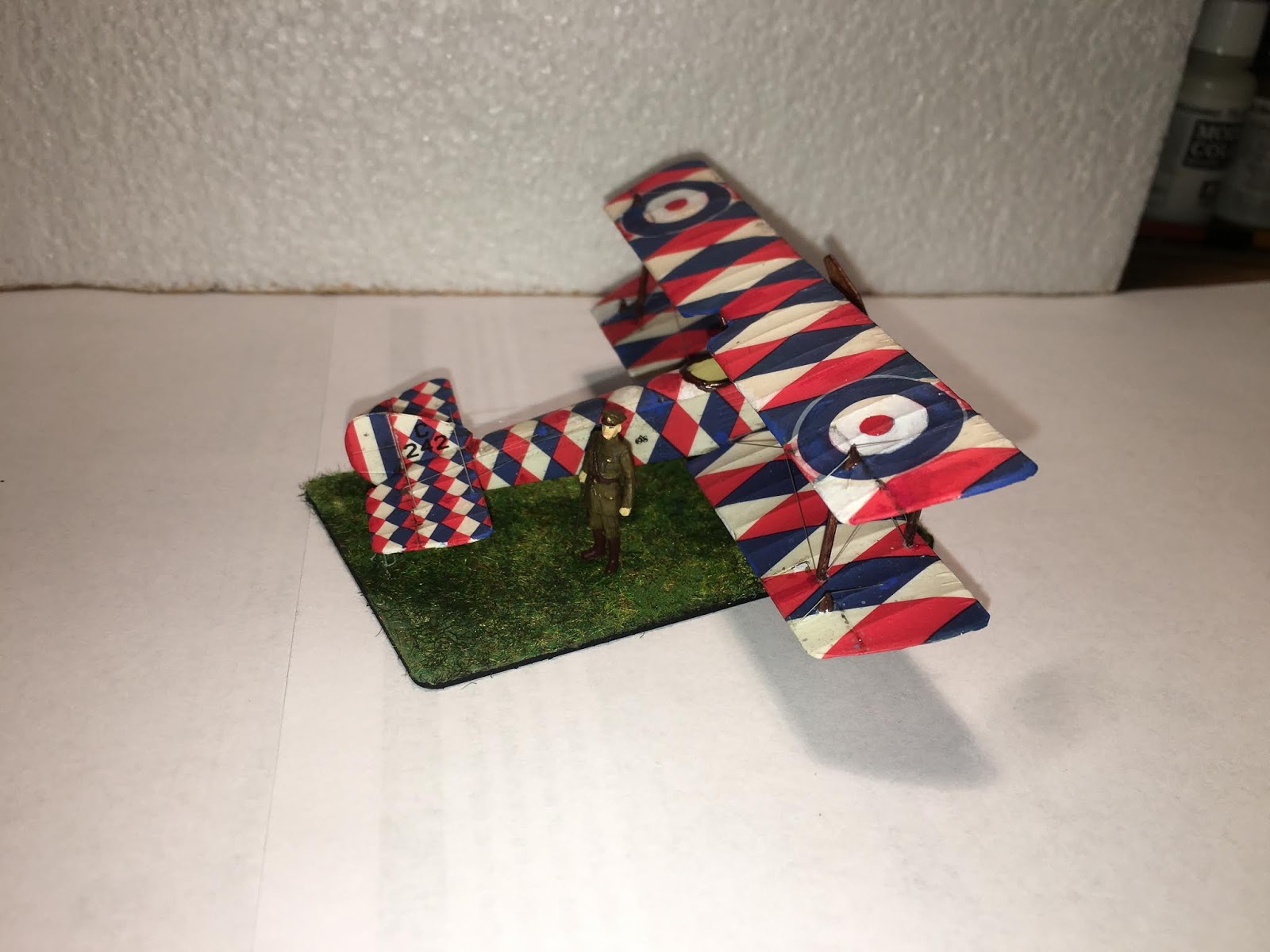
The Airfix Pup remains a fun build, and it also features a decent cockpit, including a dashboard with instruments and some detailing of the insides of the fuselage halves. I added a seatbelt, a joystick and the floor planks. My previous summary of building a Sopwith Pup can be found here. The cadet is a modified Preiser figure with an added swagger stick.
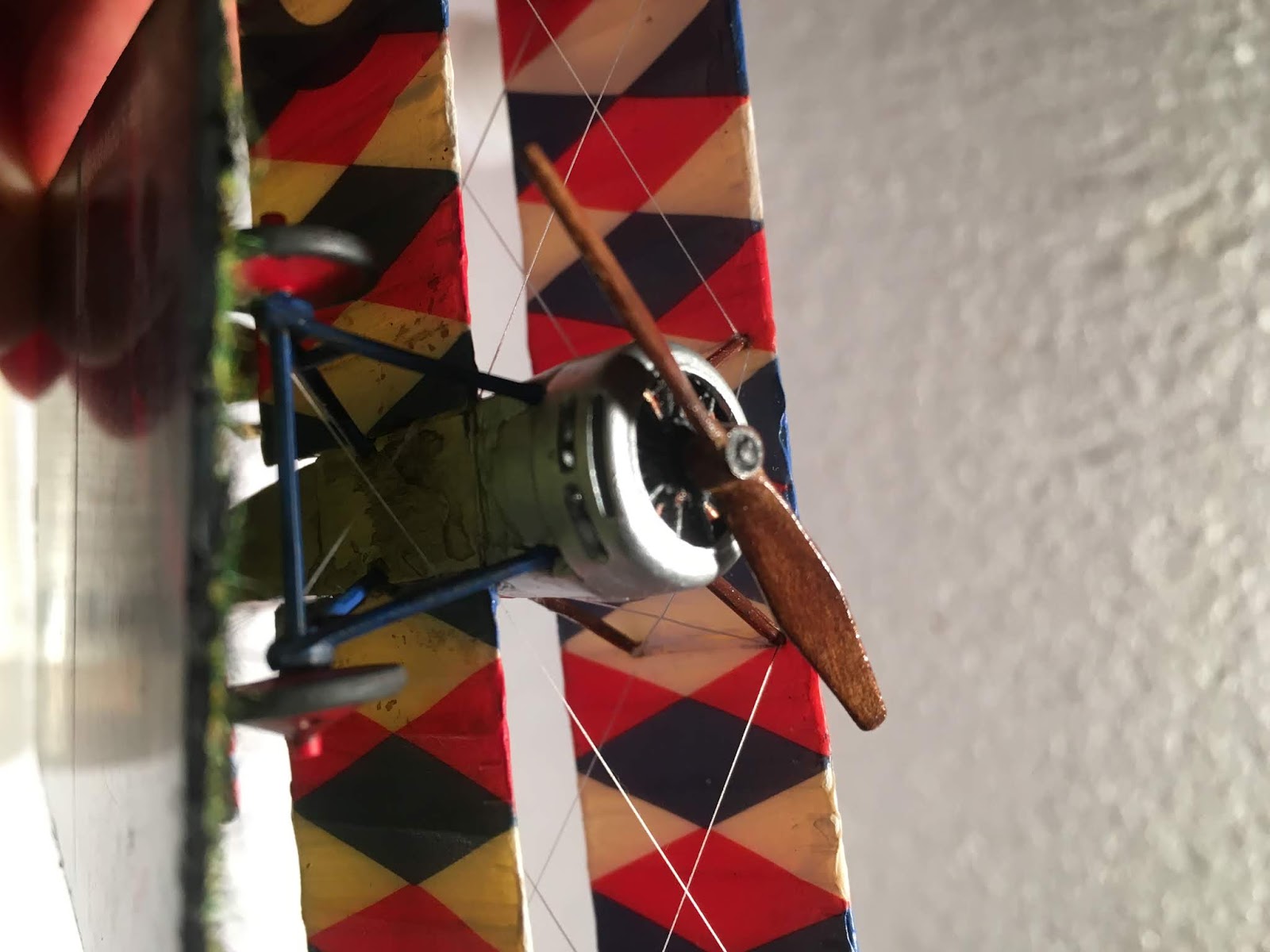
The Blue Rider decals were bought on eBay, and this was my first real attempt to use decals that actually cover most of an aircraft. The decals were of excellent quality, and they worked well with setting solution, although it remains difficult to join decals over, for example, the wing edges. I did add some weathering to make this Pup actually look like an aircraft that is handled by inexperienced pilots on a daily basis as well as being subjected to inclement weather and rough landings. Matte varnish took away most of the gloss of the decals, making the Pup look less toy-like. By the way, C242 seems to have ended up in civilian use, being registered as G-EBFJ after the war.






Netheravon just before the outbreak of war.


Sopwith Pup C242.