Showing posts with label Wilde Sau. Show all posts

Thursday, April 30, 2015

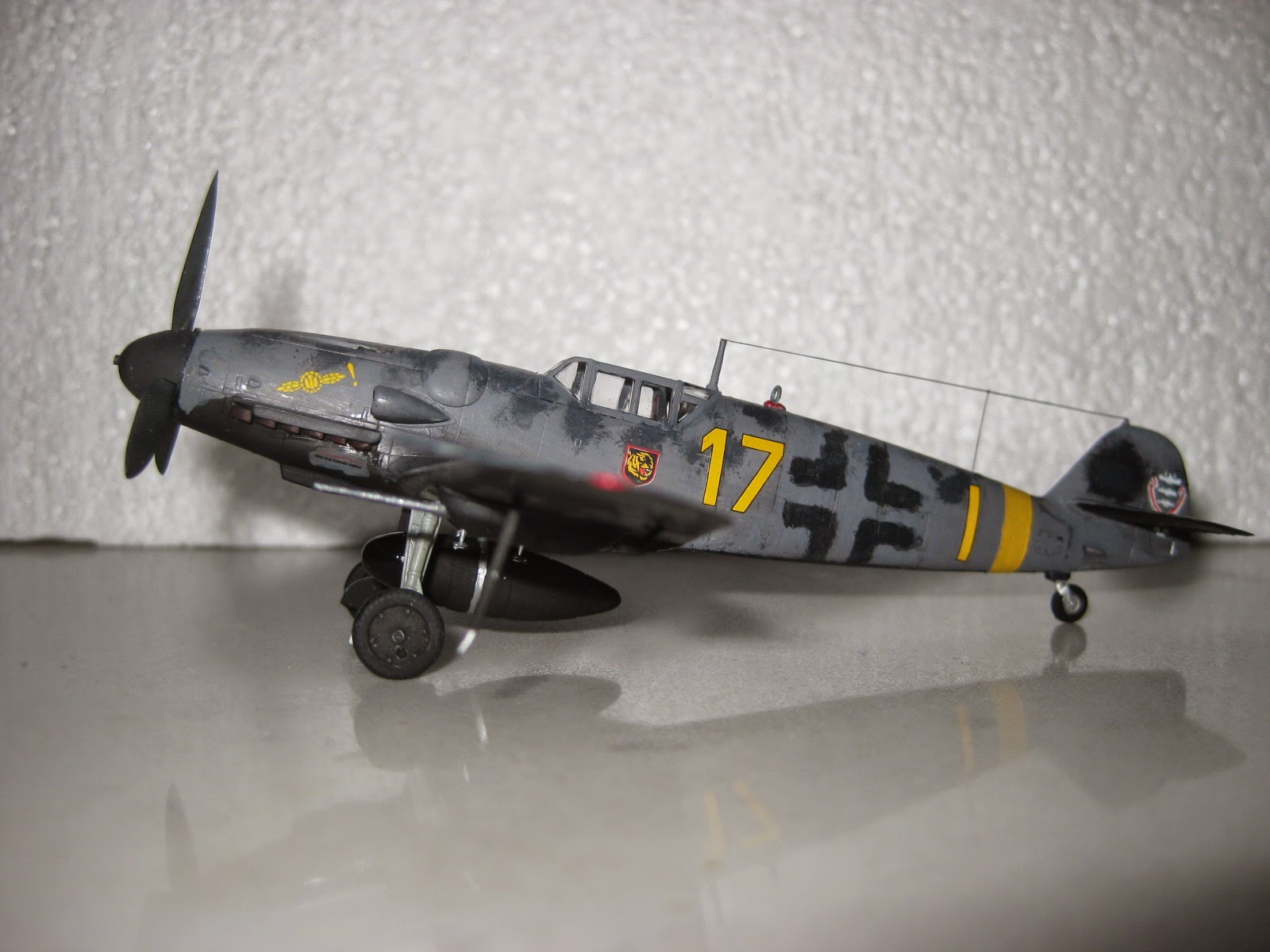
Messerschmitt Bf 109 G-6 of Gerhard Stamp, III./JG 300 "Wilde Sau".

JG 300 Wilde Sau was the brainchild of bomber pilot Major 'HaJo' Herrmann who had advocated for the use of single-engined as night fighters against RAF Bomber Command once the use of 'Window' had made German radar systems ineffective. Targets were to be identified by having the bombers silhouetted against the search lights and fires in and around a bombing target, thus not relying upon radar. Trials with a Versuchskommando Herrmann started at Deelen on June 26, 1943, and the first combat mission was flown on the night of July 3/4 against a force of some 653 RAF aircraft attacking Cologne. JG 300 was formally established on August 30, 1943, and the sister units JG 301 and JG 3012 were combined with JG 300 to form the 30. Jagd-Division, albeit with a limited compliment of aircraft. The units had a not inconsiderable amount of success during 1943, although there were many accidents, especially during nighttime landings. The Wilde Sau units were increasingly committed to daytime operations during 1944, and they were duly worn down by the Allied onslaught.

Since night flying with single-engine aircraft required considerable skill, many JG 300 pilots were former bomber pilots, and so was Gerhard Stamp. He was born on June 3, 1920, and even before joining JG 300, he was credited with sinking 35,000 gross register tons (GRT) of Allied merchant shipping as well as the Royal Navy destroyer HMS Defender on July 11, 1941 and various aircraft and vehicles on the ground while flying a Junkers Ju 88 in Lehrgeschwader 1 over the Mediterranean. Another 45,000 GRT of shipping was claimed as damaged. Stamp then proceeded to hold various positions in JG 300 before taking command of 10./NJG 11 (another night fighter unit) in October 1944. His final position during the Second World War was as the commanding officer of Kommando Stamp, an experimental night fighting unit equipped with Messerschmitt Me 262 jet fighters that was formed in December 1944 and tasked with bombing enemy bombers with 250- and 500 kg bombs. Kommando Stamp did claim some successes using this tactic, although these successes seem to be unconfirmed. Stamp flew 300 bomber missions and 100 fighter missions, and he claimed five enemy aircraft, although only four seem to have been confirmed:

- August 23, 1943: unidentified four-engine aircraft claimed at 01.30 over Berlin (3./JG 300)
- September 23, 1943: Lancaster claimed at 23.15 10 km west of Mannheim (8./JG 300)
- February 3, 1944: B-17 (Stab I./JG 300)
- March 22, 1944: Lancaster (8./JG 300
- October 7, 1944: P-51 claimed at 11.55 around Querfurt and Naumburg (Stab I./JG 300)

Stamp was also shot down once, on June 29, 1944, while flying a Bf 109 G-6/U-2 near Lodersleben.

Major Gerhard Stamp was decorated with the Ritterkreuz, and he joined the Bundeswehr in 1956 for a second military career. He retired in 1978 as Oberst i. G. and he passed away in 1998.

I had purchased EagleCals' Bf 109 Gs and Fw 190s JG 300 Part Three several years ago, and I had already finished a Fw 190 of "HaJo" Herrman with these excellent decals (http://cocktailtriviaandnarrowfocus.blogspot.com/2012/11/wilde-sau-fw-190a6-of-stabjg300-flown.html). Now I thought it was time for a Bf 109.

The Academy Bf 109 G-6 kit is easy to build with neither sink holes, nor flash or gaps that need to be filled. The cockpit is decent, although it lacks a sight which had to be scratch built in this case.The markings are actually of an aircraft from III./JG 11 that was flown by III./JG 300 and repainted as a night fighter. It was used by Oberleutnant Stamp in September and October 1943. It was painted RLM 75 and RLM 74 with a dark gray layer of paint to obliterate the Hakenkreuz, the crosses on the fuselage and most of the stencilling for some reason. The yellow band as well as the tiger's head is from JG 11, while the Ritterkreuz, the ship's silhouettes and the bomber clasp are Stamp's personal markings. The underside is black with the crosses covered with a thin layer of dark paint to provide a form of low visibility markings.



The decals

Gerhard Stamp


Monday, November 19, 2012

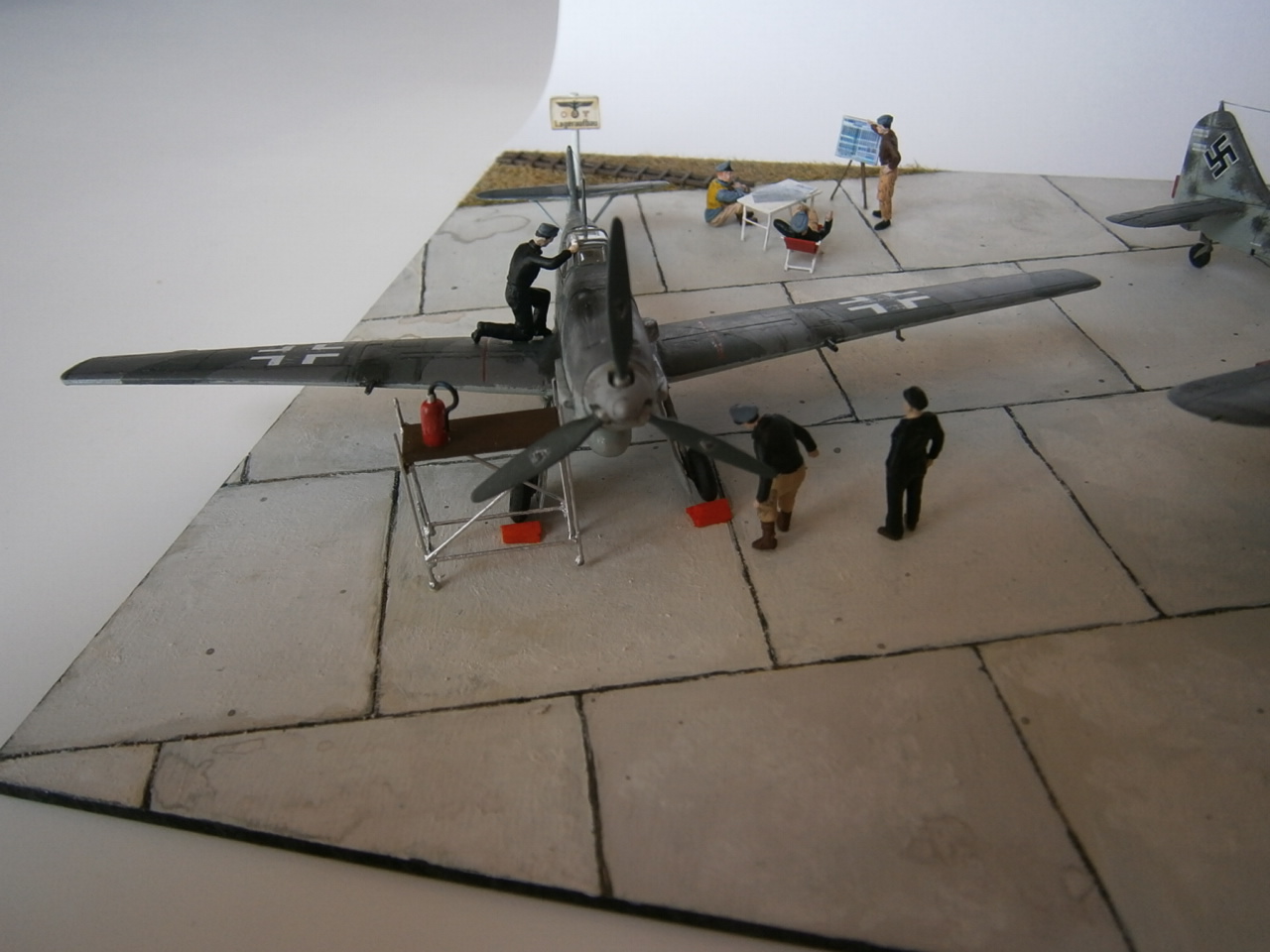
Wilde Sau - Fw 190A6 of Stab/JG300 flown by Hauptmann F-K Müller and Bf 109T-2


Wilde Sau as well as Jagdgeschwader 300, 301 and 302 came into fruition after an initiative by Oberst HaJo Herrmann, a former bomber pilot. Single-seat fighters were to climb above RAF bombers and thus find the bombers silhouetted against clouds illuminated by searchlights or the burning targets on the ground. JG 300 was the first unit to be organized, and there were initially some difficulties finding aircraft. Pilots were authorized to borrow day fighters, and there are indications that JG 300 took over some of the Bf 109 T-2 that were initially produced for use on the planned aircraft carrier Graf Zeppelin.

Friedrich-Karl Müller — "Nasen-Müller" — (4 December 1912 – 2 November 1987) was one of the most successful night fighter aces.  In the summer of 1943, Müller was invited to join Hajo Hermann and implement the latters Wilde Sau tactics. Hermann considered Müller an ideal candidate for the role because of his blind flying instructing experience. He was appointed Technischer Offizier of JG 300 on its inception in June 1943. On the night of 3/4 July, Müller recorded his first Wilde Sau victory. At the end of November 1943, Müller was appointed Staffelkapitän of 1./JG 300. He had 19 victories to his credit at this time, eventually ending - and surviving - the war with 30 night victories during 52 missions.

The models are the Academy Fw 190 and the RPM Bf 109 T-2. These were perhaps not the ideal choices, with the Fw 190 suffering from some inaccuracies in the cockpit area and with the detail on the Bf 109 being quite soft. Nevertheless, they were easy to assemble and the with some paint and decals they look the part. Astute observers will notice that the Fw 190 is lacking its head rest, and that is intentional: Müller removed the head rest to improve cockpit visibility. The aircraft are definitely parked precariously close to each other, but artistic license will have to explain that. The figures are from Revell, and the vehicles from Fujimi, while the various pieces of furniture are scratch built. Hopefully you can imagine HaJo Herrmann reclining in his red beach chair while "Nasen-Müller" elaborates on tactics and technology at the blackboard.

 "Nasen-Müller"