Tuesday, October 23, 2018

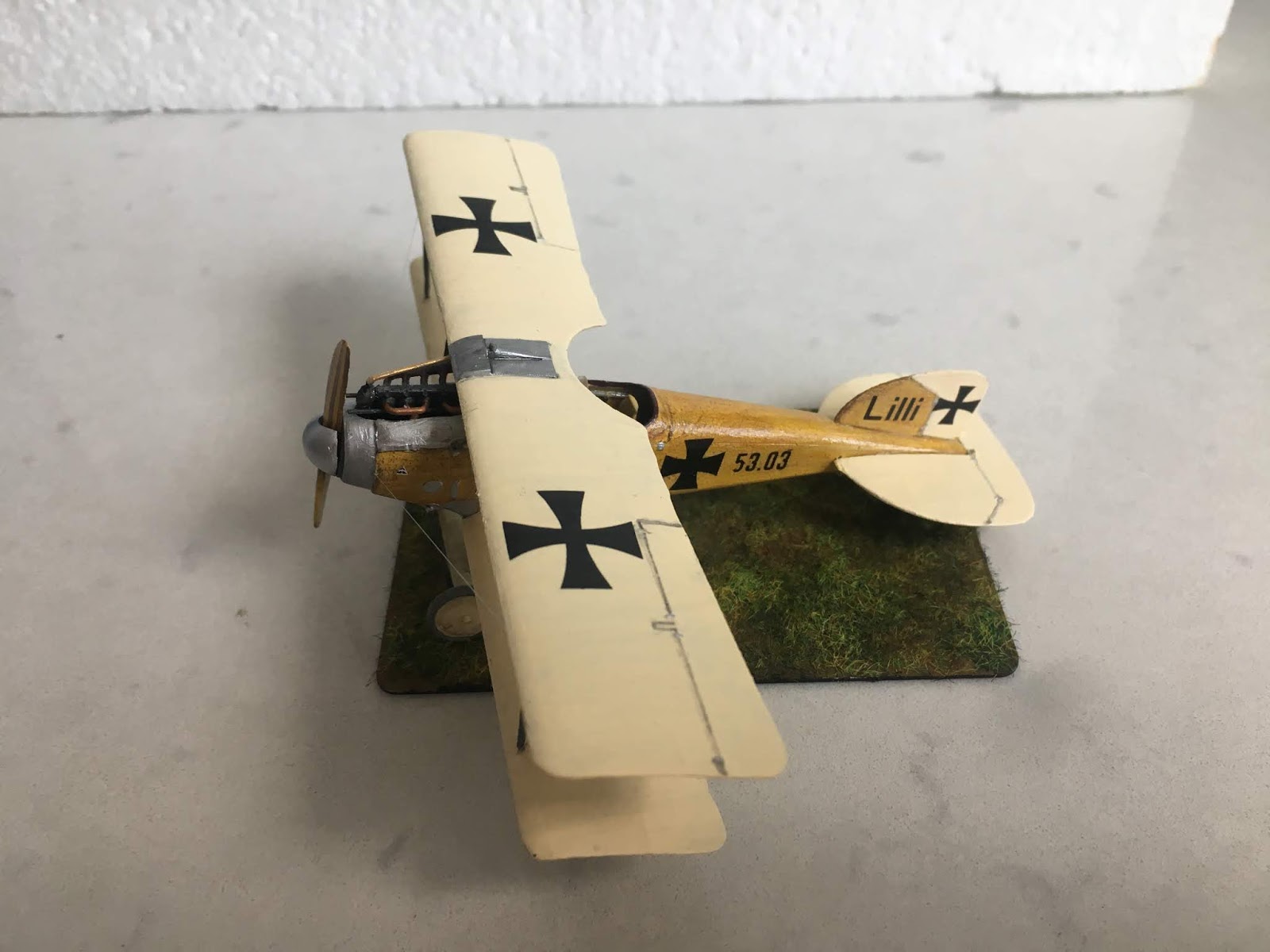
Albatros D.II/Oeffag S.53 of Feldwebel Rudolf Lonstak

The Ukrainian model company Roden has made various makes of the Albatros, from the D.I to the D.V and both German and Austro-Hungarian versions. They are all of decent quality and well detailed, although dry fitting is highly recommended, and certain parts are quite fiddly, most notably the lower wings and the engine coolant pipes. One should also be careful when applying the decals, since they are quite brittle. With this being said, the Roden kits are just a step below the Eduard kits, and they are well worth spending time on. This particular Oeffag (Oesterreichische Flugzeugfabrik AG) Albatros came with half a dozen different markings, and for no reason inparticular I decided to finish this one in the markings of 53.03 flown by the Hungarian pilot Feldwebel Rudolf Lonstak. Vallejo Paints were used, and rigging as well as a windscreen was added before mounting the D.II on an old hotel key card covered with static grass.

Only 16 examples of the Oeffag series 53 were built before production shifted to D.III aircraft. The series 53 Albatros had a stronger 185 hp Austro-Daimler Engine than the German D.IIs, a Teves und Braun wing radiator and the machine guns were fitted within the engine cowling. The Oeffag D.IIs soldiered on throughout the entire war, and some survivors even found their way to Czechoslovakia after the war.

Rudolf Lonstak flew for Fliegerkompanie (Flik) 14 in Galicia on the Eastern Front, and he had four victories. Albatros D.IIs were delivered to the Eastern Front during the early summer of 1917, and Lonstak flew 53.03 during the Kerensky offensive that summer before colliding with Russian aviator A. P. Chudnovskiy in a Nieuport XXII of the 2nd Corps Aviation Detachment (2-й корпусной авіаціонный отрядъ) on September 1, 1917. However, 53.03 was not flown by Lonstak on the day of the collision, and it served as the mount of Corporal Blass of Flik 25 during at least November of 1917. Lonstak was posthumously awarded the Golden Bravery Medal on August 31, 1918, while 53.03 survived the war, ending up at Radioversuchsstelle Aspern without an Engine


Sources:
aerodrome.com
www.vrtulnik.cz/ww2/flik_14.htm


The drawing depicts 53.03 with the engine cover. This was often removed to improve cooling. The fin is depicted as painted white, although the Roden instructions claimed that it was natural linen.




Monday, October 8, 2018

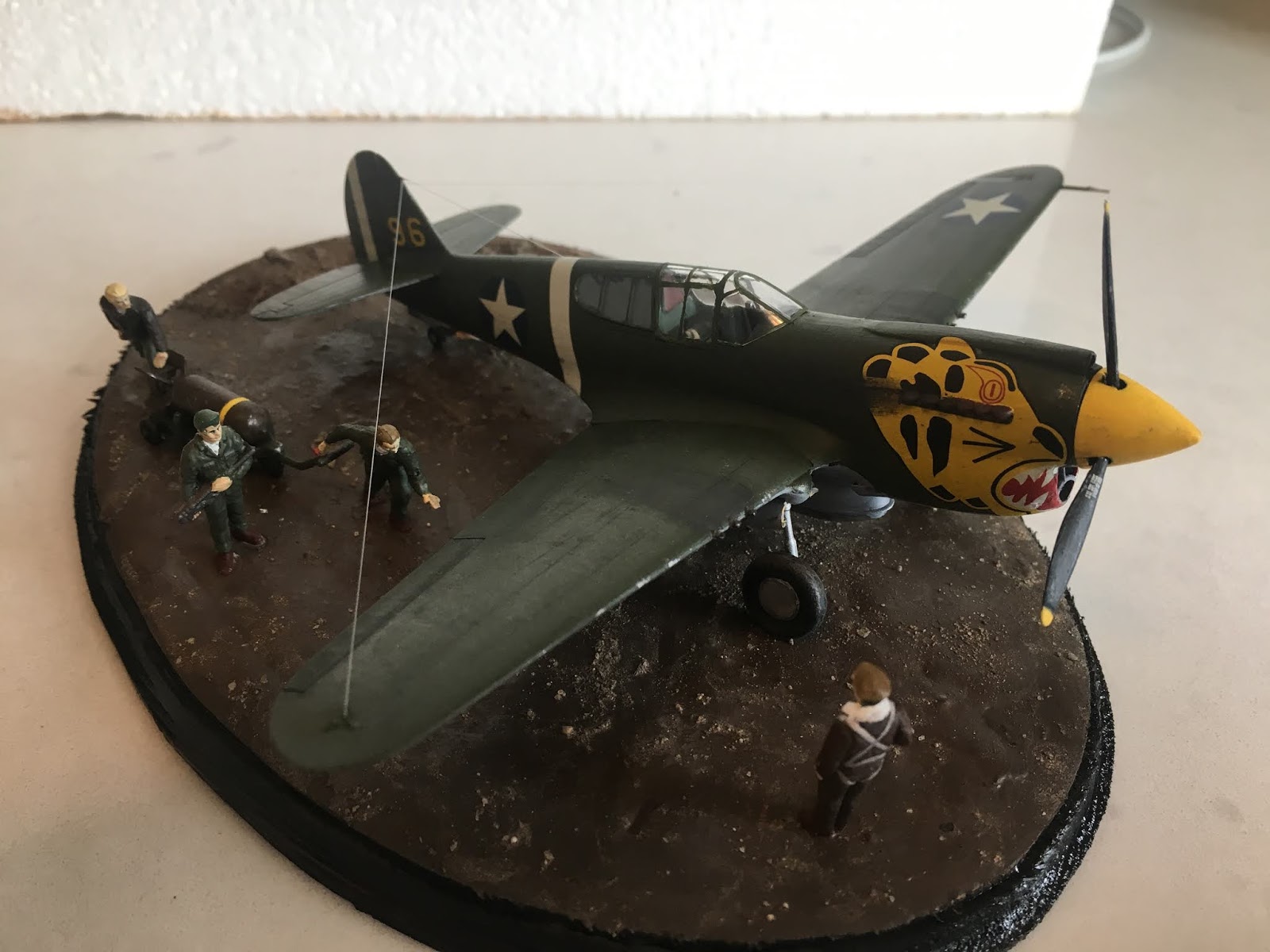
Curtiss P-40E of 343rd Fighter Goup, 11th Fighter Squadron

The Hasegawa kit is rather basic in terms of parts, but the panel lines are finely recessed, the surface detail is good, and the details sufficient. Oddly enough, the landing gear can only be completed as lowered. The decals are really good, though, and so is the fit. It was a fun and fast build that was displayed in a little vignette with some Airfix USAAF ground crew. The Airfix figures are, of course, made out of polystyrene, so they are difficult to clean up, and details are lacking

This P-40E is wearing the markings of the 11th Fighter Squadron of the 343rd Fighter Group which fought against the Japanese above the Aleutian Islands in western Alaska between 1942 and 1943. The Aleutian tiger nose art was characteristic of the entire group, and there were other similarities between this unit and the more famous Brothers-in-arms of the "Flying Tigers": the commanding officer of the group was Claire Chennault's son! A very interesting combat diary of the 54th Fighter Squadron, another unit of the 343rd can be found here: https://www.nps.gov/aleu/learn/photosmultimedia/upload/54th-FS-history-all-pgs.pdf