Saturday, March 30, 2013

F-86A Sabre, 4th Fighter Interceptor Wing, Kimpo AFB, South Korea, June 1951

This Matchbox kit is, to the best of my knowledge, the only one of a F-86A that can be found. It is basic, but comes together well. The decals are a bit thick, as Matchbox decals tend to be, but since I wanted to build this kit out-of-the-box, I used the markings that were provided. The aircraft is obviously mounted on the little stand that comes with the kit, and the reason for this is twofold: the landing gear was very basic, and since the kit doesn't come with drop tanks, it looked rather attractive as a clean F-86, all fresh and gleaming.

The 4th Fighter Group ("The MIG Killers") was formed on September 12, 1942, and it included the American pilots of the Royal Air Force Eagle Squadrons. It was re-formed in 1947 as apart of the Strategic Air Command, and it was the first unit to deploy Sabres in Japan in November 1950 after it was clear that the Chinese had committed MiG-15s against the UN forces in Korea. The 4th FIW was composed of the 334th, 335th and 336th squadrons and also the Royal Australian Air Force No. 77 Squadron. The 4th claimed 502 enemy aircraft during the Korean War, with 24 pilots becoming aces. The 4th FIW was the top-scoring fighter unit in the Korean War.
 
The pilots of the 4th Fighter Interceptor Wing included well-known aviators such as aces Colonel Frances Gabreski and Major James Jabara, the first jet ace. Future astronaut John Glenn flew his second tour with the 4th FIW as part of an interservice exchange program.


http://www.finesthourart.com/shop/totherescue.jpg

Sunday, February 10, 2013

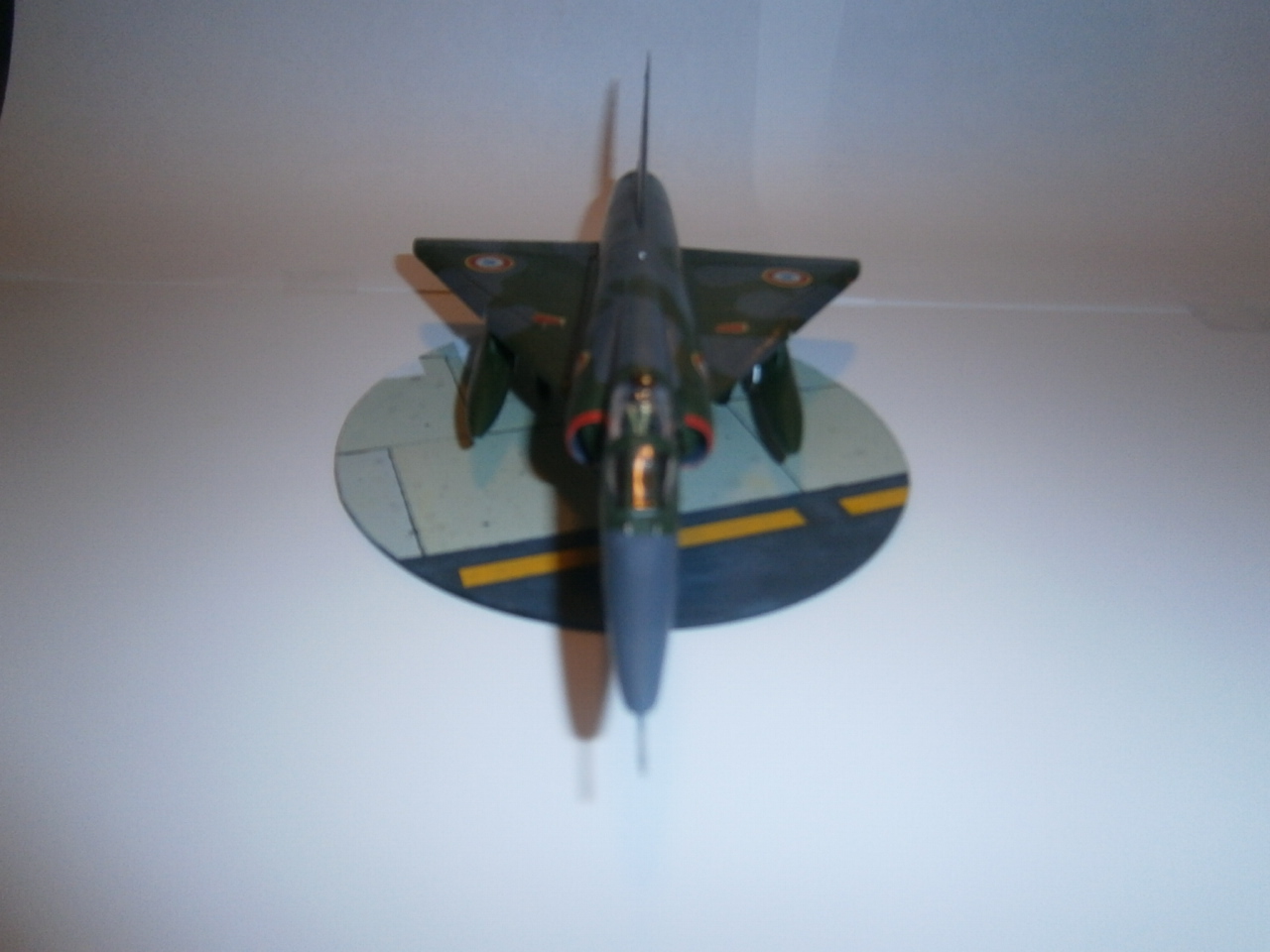
Dassault Mirage IIIR from ER 3/33 'Moselle', Strasbourg-Entzheim, early 1970s.

The iconic French Mirage fighter came in many versions, including this reconnaissance version that replaced the RF-84F Thunderflash in French service. It was also used by Abu Dhabi, South Africa, Pakistan and Switzerland.

The navigational calculator of the IIIR was not up to par, and a modernized version was designed to be fitted with systems from the Mirage IIIE. ER 3/33 'Moselle' was the only unit to use this modernized version of the IIIR, the Mirage IIIRD, this version having the same Doppler effect Cyrano radar as the IIIE (the designation 'D' was for Doppler). The 'Moselle' squadron received these aircraft between 1967 and 1969, and they were eventually replaced in 1988. Twenty Mirage IIIRD were delivered to the Armee de l'Air, and they were in turn replaced by the Mirage F1CR.

A Mirage IIIR was used by Jacqueline Auriol to improve her closed-circuit speed record on June 14, 1963, when she completed the course at an average speed of 1,268.75 mph or 2,030 kph.

The Revell 1/72 Mirage III is from the 1970s, and it retained some of the features of an era when models were built to be toys: a canopy that could be opened, an engine that could be pulled out for examination, and wheels that could be made to roll. It is nice kit for its era, and it provides markings for Mirage IIIE, IIIS, IIIRS and IIIRD aircraft of the French and Swiss air forces, although the decals were quite disappointing. The Mirage was painted in Vallejo colors. Headlights and front antennae were added to the kit.


Thursday, January 17, 2013

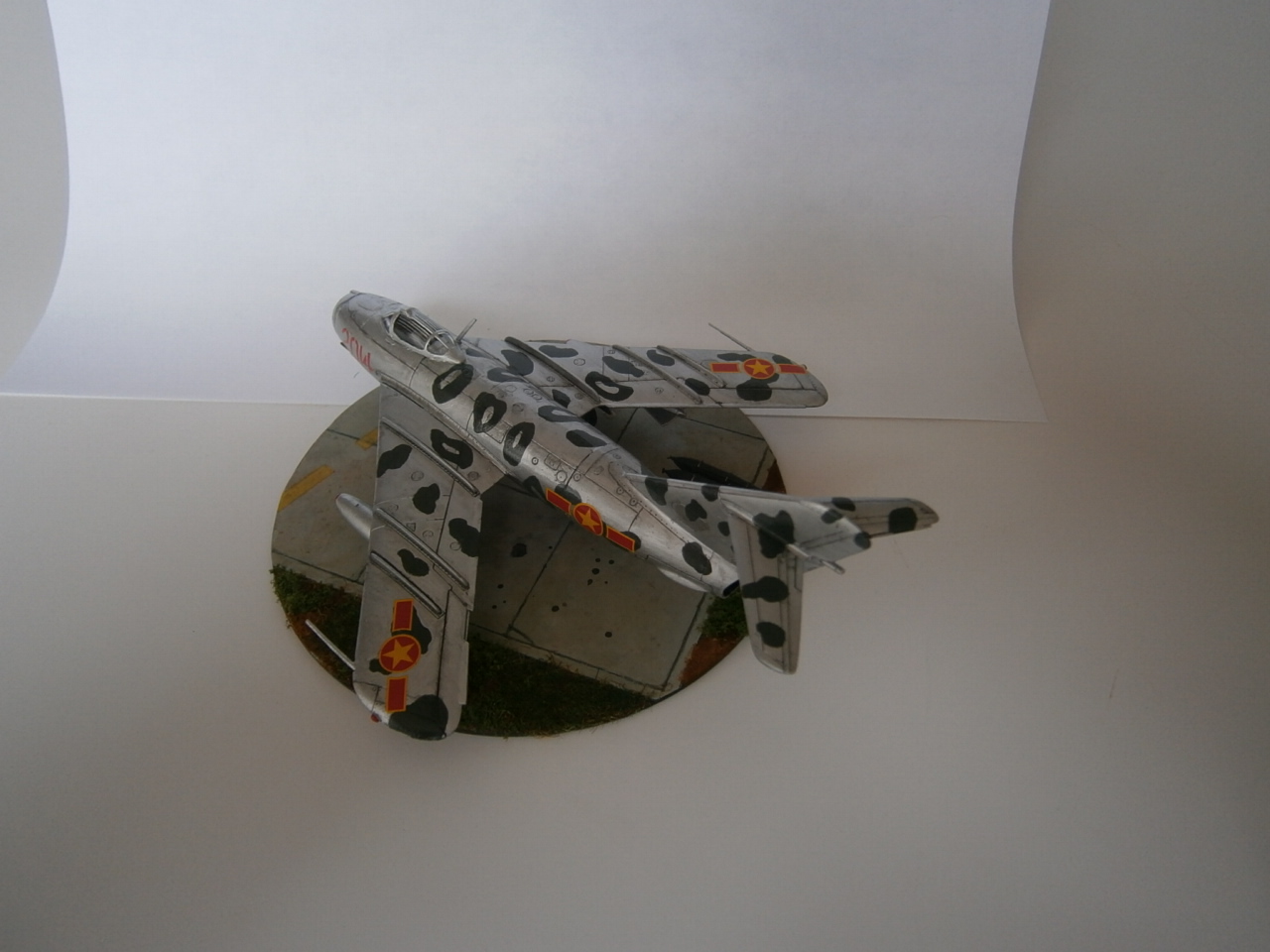
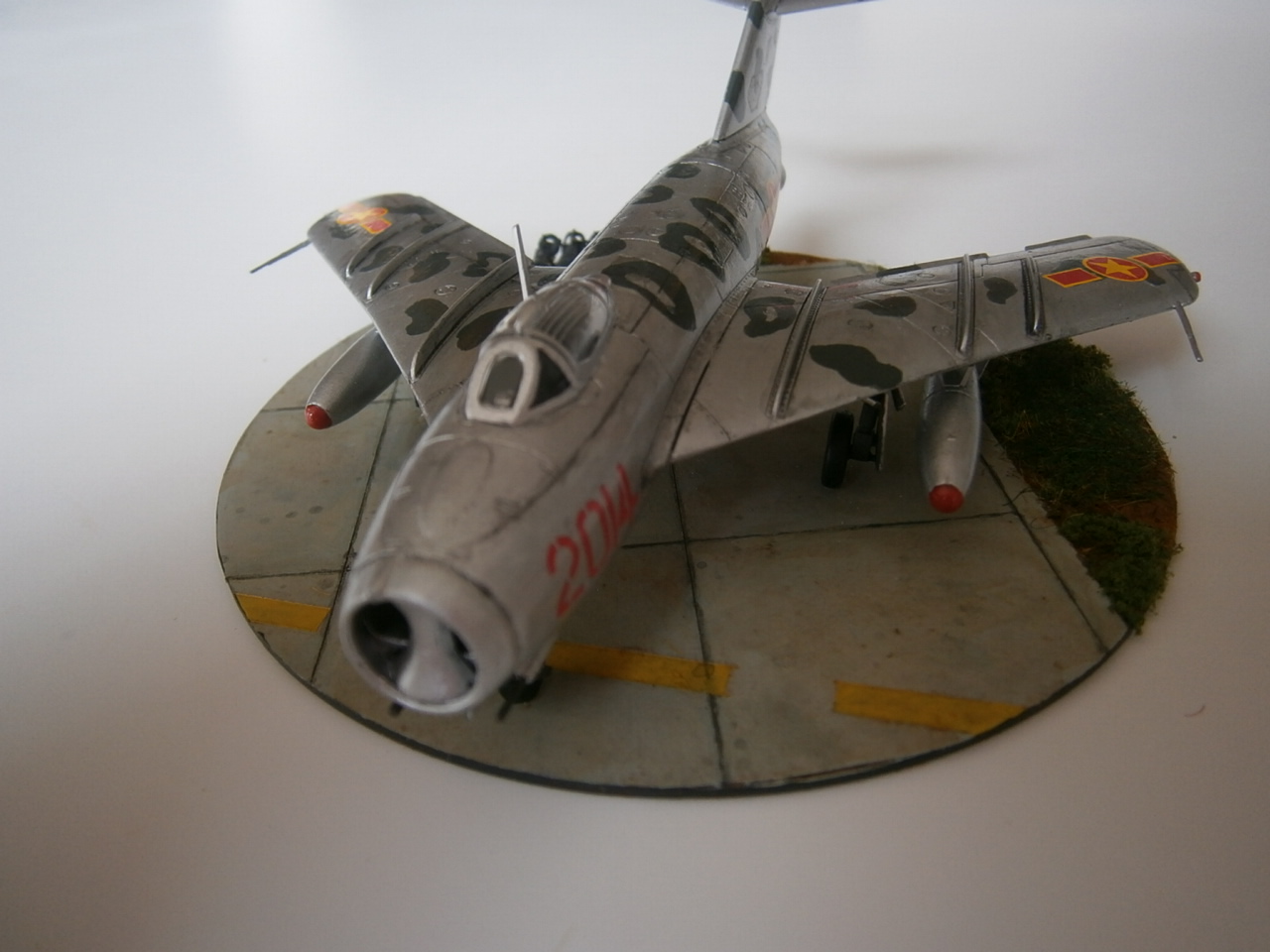
MiG-17 FRESCO-A of the 921st Air Regiment, Vietnamese People's Air Force (NVAF)

The MiG-17 as well as the Chinese version, the Shenyang J-5, was the most numerous fighter in the Vietnamese People's Air Force, with the first batch of 36 arriving as "gifts" from the USSR in February 1964 together with a few MiG-15UTI trainer aircraft to equip the 921st Air Regiment, which was the first unit to be formed by the NVAF. MiG-17s first saw action on April 3, 1965, when two groups of MiG-17s took off from Noi Dai Airbase under the command of Lieutenant Pham Ngoc Lan. The first group of two MiGs was to act as a bait for US aircraft while the second group of four MiGs was to engage enemy aircraft. The target was a US Navy strike package consisting of 80 aircraft that was tasked with the destruction of the Ham Rung bridge near Thanh Hoa.

The group of four MiGs attacked a group of F-8E Crusaders of VF-211 from USS Hancock, and Lieutenant Lan did damage a F-8E flown by Lieutenant Commander Spence Thomas, who had to perform an emergency landing ashore at Da Nang. Lieutenant Lan's wingman, Lieutenant Phan Van Tuc claimed a second F-8, although this was not corroborated by the the US Navy.

Three North Vietnamese aviators became aces while flying MiG-17s: Nguyen Van Bay with seven victories together with Luu Huy Chao and Le Hai who both scored six victories. MiG-17s accounted for 71shot down US aircraft, with most of the victories being supersonic-capable jets a generation ahead of the 1950s vintage MiG-17. Two MiG-17s were also the first aircraft to attack USN vessels since WW2, when the light cruiser USS Oklahoma City and the destroyer USS Higbee were bombed on April 19, 1972.

This model is the old Dragon FRESCO-A, the initial version of the MiG-17 that lacked an afterburner. The paint scheme can be found at the bottom of the page, and the camouflage pattern in intentionally splotchy and shoddy, since the NVAF often used automotive paints for camouflage. The paints would wear off more easily than proper aviation lacquer. The FAB-500 bombs were added to fill out space, but they were not used by NVAF MiG-17s (FAB-250 bombs were used against the USN vessels). The kit does have some issues, with the nose wheel well blocking the air intake, the flaps being slightly incorrect as well as some general fit issues, but the result is rewarding nevertheless. Now I'd like an F-4B, please.